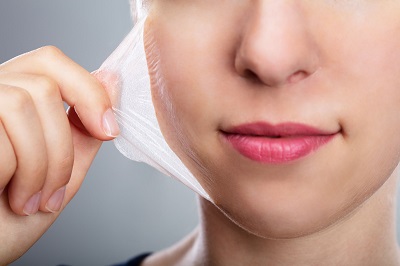
Chemical peeling is a popular, relatively inexpensive, and generally safe method for the treatment of some skin disorders and to rejuvenate skin. Chemical peels are classified on the basis of depth of their action into superficial, medium, and deep peels. Superficial and medium depth peels are more suited for Indian patients.
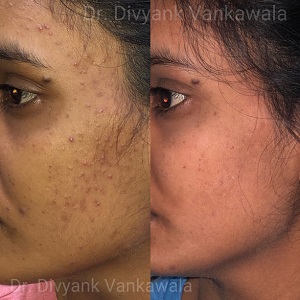
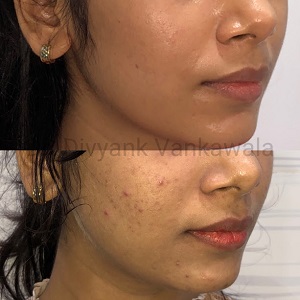
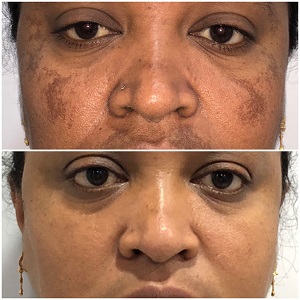
Peels are used to treat a variety of conditions including acne, melasma, dyschromia, photodamage, actinic keratosis, and superficial scars to name some. Chemical peels are used to create an injury of a specific skin depth with the goal of stimulating new skin growth and improving surface texture and appearance with a more evenly distributed melanin (skin color).
Different chemicals are used as peeling agents according to the indications and type of patient’s skin.
Peels are used to treat a variety of conditions including acne, melasma, dyschromia, photodamage, actinic keratosis, and superficial scars to name some.
Chemical peels are used to create an injury of a specific skin depth with the goal of stimulating new skin growth and improving surface texture and appearance with a more evenly distributed melanin (skin color).
Different chemicals are used as peeling agents according to the indications and type of patient’s skin.
- Alpha Hydroxy acids (AHA) are carboxylic acids derived from various fruits and natural sources like Sugarcane(glycolic), apples(malic), grapes(tartaric) milk(lactic), rice(phytic), almonds(mandelic). Glycolic acid is the most commonly used AHA because of a variety of indications it addresses and a high safety profile. Often used to bring the “Glow” on the face, which we all love.
- Salicylic acid is a relatively safe peel and is used to specifically treat acne patients due to its property of selectively targeting the sebaceous glands and lowering the sebum production along with anti-inflammatory, antimicrobial, and anesthetizing properties.
- Trichloroacetic acid (TCA) is used in different concentrations to achieve different depths. It is a cost-effective and simple office procedure and can be used for a variety of indications which also includes chemical ablation of warts, lentigines, Xanthelasma, and keratosis. Never the less it has to be used with great caution as it is prone to cause side effects.
- Jessner’s peel, since its formulation has been modified by changing the ingredients and their concentrations to form solutions more suitable for specific conditions. It can contain salicylic acid, lactic acid, resorcinol, citric acid, kojic acid, and hydroquinone in different concentrations.
- Yellow peels or Retinol peels are formulated using Vitamin A derivatives. These are the most gratifying peels for skin of color. These give great results in acne and acne induced pigmentation, uneven skin tone, dull skin, photodamaged and photoaged skin.
- Black peel is basically acetic acid-based peel with other added ingredients. It is very popular among our patients because of its powerful action in suppressing inflammatory acne.