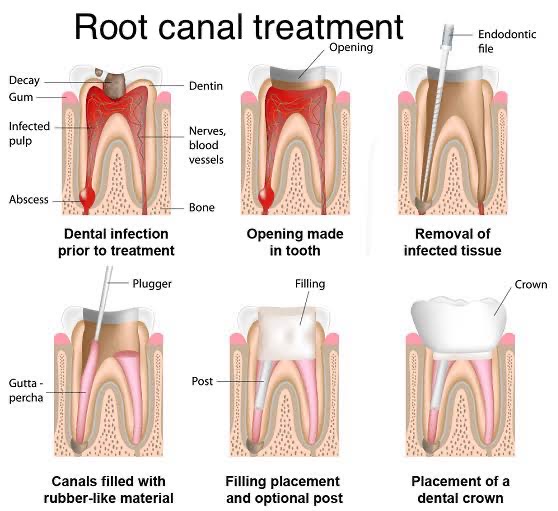
Root canal treatment is designed to eliminate bacteria from the infected root canal, prevent reinfection of the tooth, and save the natural tooth. When one
undergoes a root canal, the inflamed or infected pulp is removed and the
inside of the tooth is carefully cleaned and disinfected, then filled and sealed.
When a tooth’s nerve tissue or pulp is damaged, it breaks down and bacteria begin to multiply within the pulp chamber. The bacteria and other decayed debris can cause an infection or abscessed tooth. An abscess is a pus-filled pocket that forms at the end of the roots of the tooth. An abscess occurs when the infection spreads all the way past the ends of the roots of the tooth. In addition to an abscess, an infection in the root canal of a tooth can cause:
- Swelling that may spread to other areas of the face, neck, or head
- Bone loss around the tip of the root
- Drainage problems extending outward from the root. A hole can occur through the side of the tooth with drainage into the gums or through the cheek with drainage into the skin
Decades ago, root canal treatments were painful. With dental advances and local anesthetics, most people have little if any pain with a root canal today.